
AC Condensate Leak Damage in Garland, TX
A brown ring on the ceiling is your AC asking for help. One call connects you with checked Garland pros — an HVAC tech to stop the water at its source, a vetted crew to dry the ceiling, walls and insulation it soaked.
Get an Assessment
(972) 555-0100Open 24 hours, 7 days a week
- Your call goes directly to the number shown
- The company is named before it is sent
- Written scope before any work begins
Your AC makes water every day it runs. One small pipe carries it away.
On a humid Garland day, your air conditioner pulls gallons of water out of the air. All of it leaves through one small PVC drain line. When algae and slime clog that line — and in Texas heat, they do — the water backs up into the pan, then over it, then into your ceiling. It is the slowest, quietest water damage there is, and often the most expensive per gallon.
Garland Water Restoration is a matching service, not a restoration company, and we say that up front. We connect you with one vetted local company. The company that serves you is named and quoted in writing before work begins.
From clogged drain to ceiling stain
Every stage of an AC leak is cheap to fix — until the water reaches the drywall. Here is the chain, link by link.
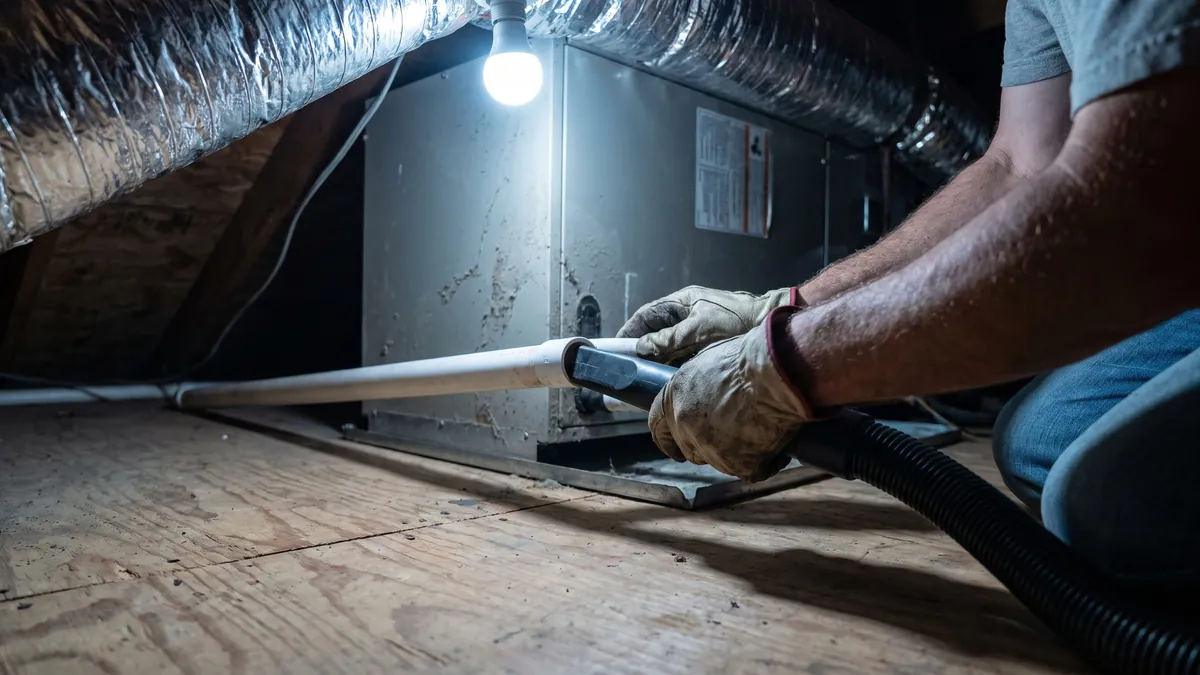
The Clogged Drain Line
Warm, wet and dark — a condensate line is a perfect home for algae and slime. One summer of growth can close a 3/4-inch line completely. Clearing it is a vacuum, a flush, and twenty minutes.
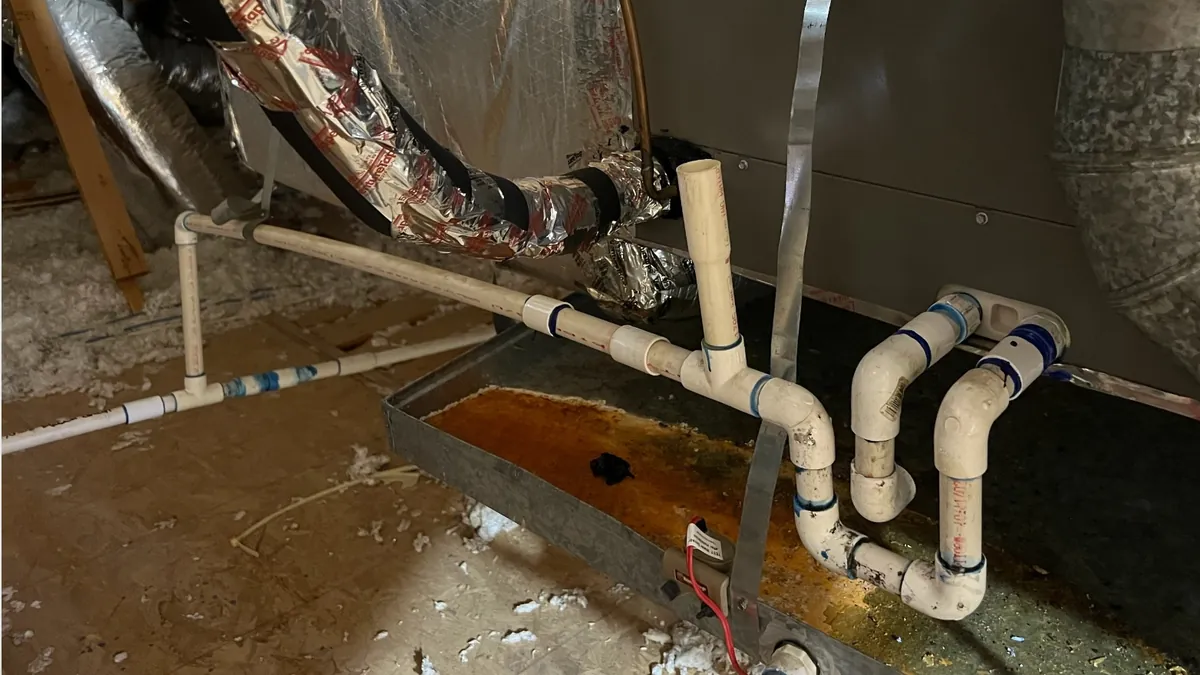
The Overflow Pan
Attic units sit over a secondary pan meant to catch exactly this failure. When the pan’s own drain clogs too — or the pan rusts through — the water has one way left to go: down.
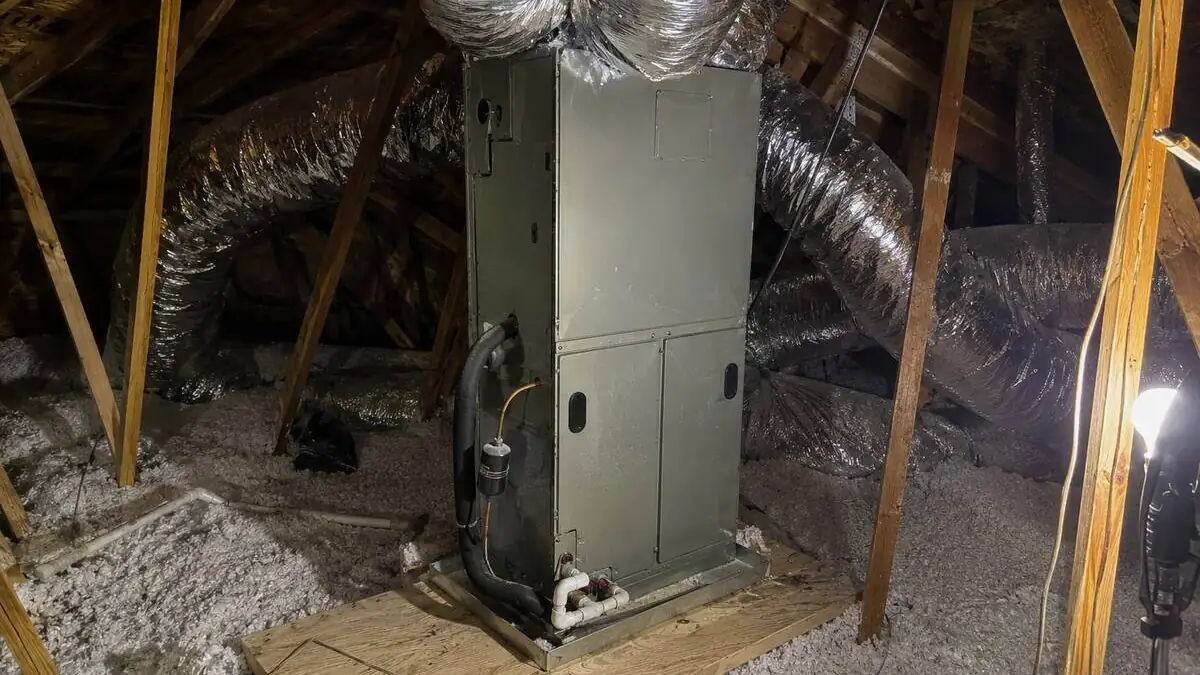
Attic Air Handlers
Most Garland systems live in the attic, above the ceilings you look at every day. A leak up there can run for weeks, soaking insulation in silence, before the first stain shows below.
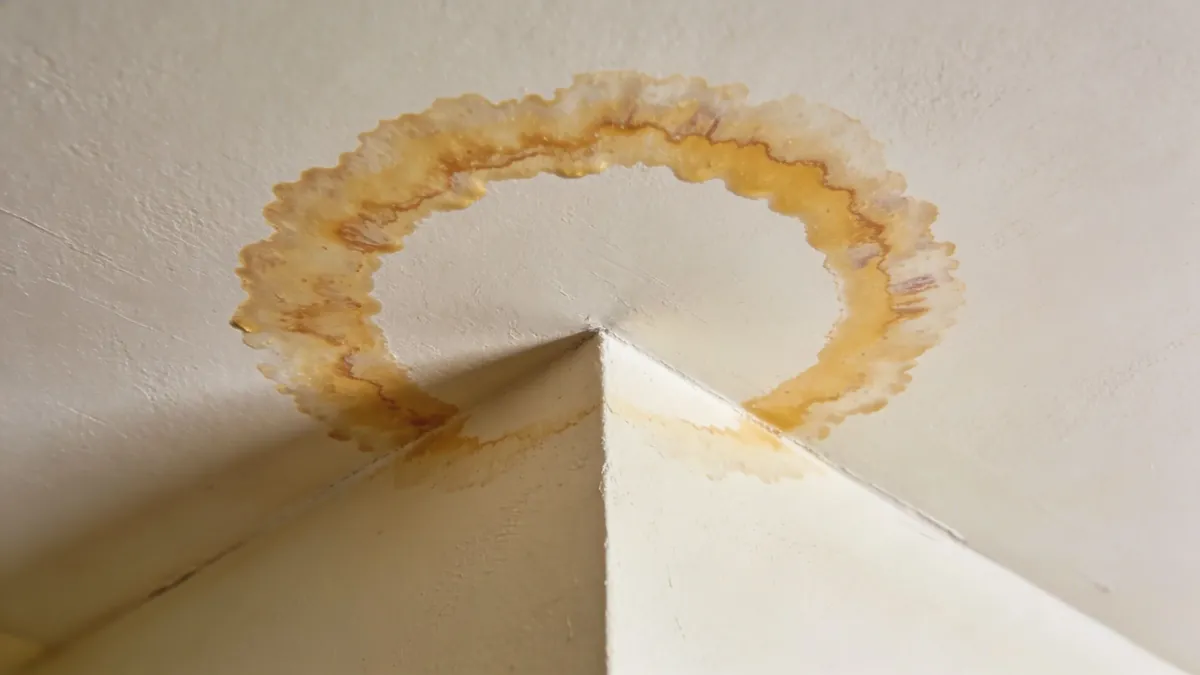
The Ceiling Stain
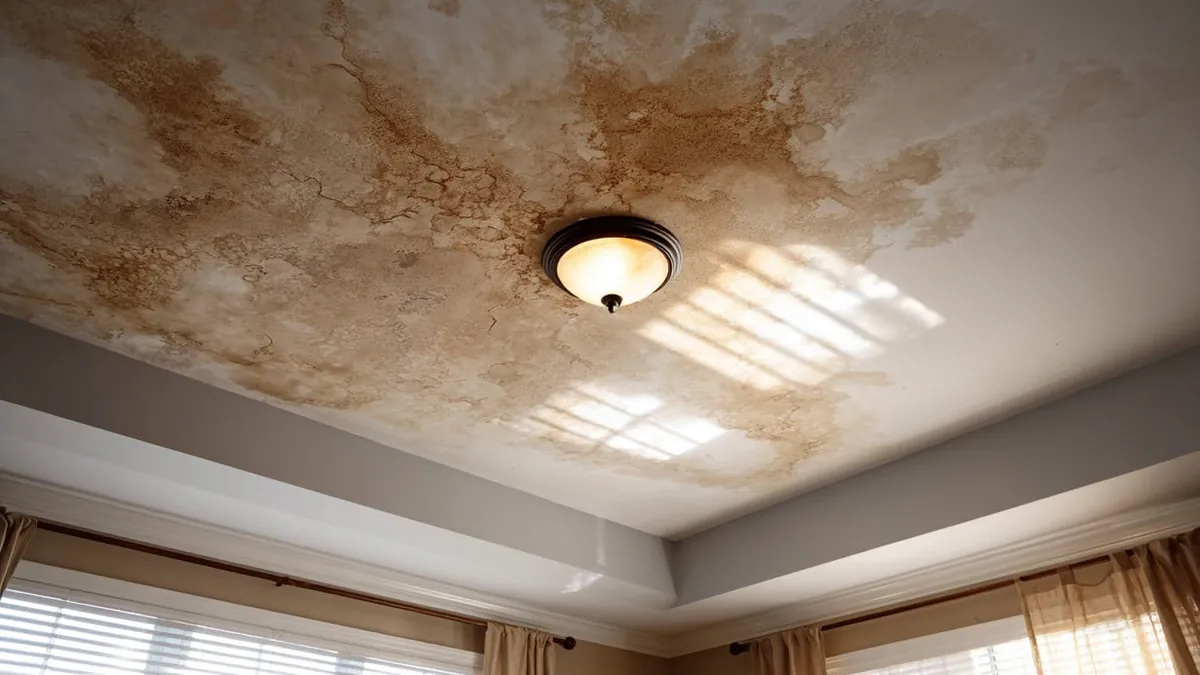
That neat brown ring is a tide mark — proof the ceiling above has been wet, dried, and wet again. By the time it paints itself, the insulation above is usually soaked through.
The Float Switch
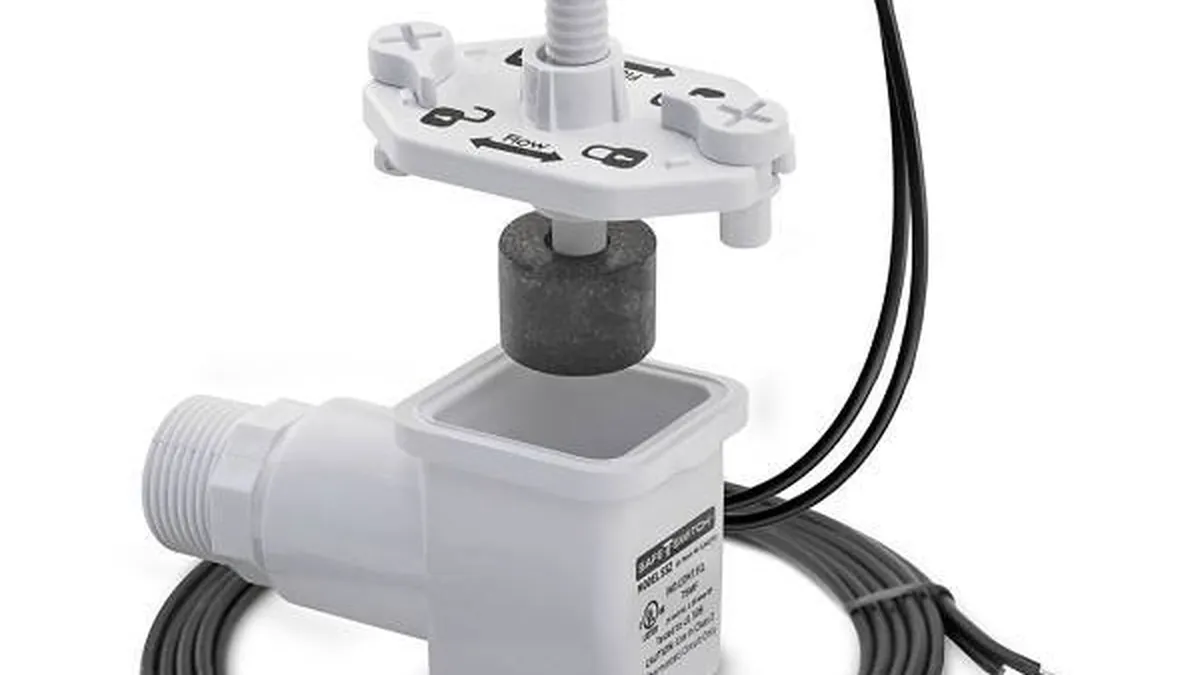
This small device floats up with rising pan water and switches the AC off before it overflows. If your system “mysteriously stopped cooling,” the switch may have just saved your ceiling — check the pan before resetting anything.
When the Ceiling Lets Go
Wet drywall gets heavy. Left long enough, an AC leak stops being a stain and becomes a sagging, collapsing ceiling — with mold already growing on the wet paper backing.
Turn it off, or keep cooling?
An AC leak punishes both extremes — running the system keeps making water, but a Garland August without cooling is its own emergency. Here is the honest middle path.
| Step | What it does | Why it matters |
|---|---|---|
| Switch the system OFF | Stops the AC making new condensate | An off system cannot overflow — the leak truly stops |
| Check the pan | Standing water = the drain is clogged | Confirms the cause in one look, before anyone charges you |
| Do not just reset it | A tripped float switch will trip again | Resetting without clearing the clog restarts the overflow |
| Wet-vac the line | Clears most algae clogs from outside | The one DIY fix that actually works on this problem |
| Dry what got wet | Ceiling and insulation dried | Skipping this step is how a small fix becomes a mold job |
The rule: the HVAC tech fixes the cause, the drying crew fixes the damage. Any company that does only one and shrugs at the other has finished half your job.
What we do on every call
- Stop the source first. System off, pan checked, drain line cleared or the HVAC tech dispatched — drying against a running leak is wasted money.
- Find the real wet area. Meters and a look in the attic map how far the water travelled through insulation and drywall — usually further than the stain.
- Dry the ceiling cavity. Air movers and dehumidification aimed into the ceiling and wall cavities, not just at the visible stain.
- Antimicrobial treatment. Surfaces that stayed wet get treated, because condensate that sat in a dusty attic is no longer clean water.
- Check for mold. Wet drywall paper is mold food. Growth found early is a cleaning job; found late, it follows the licensed path.
- Prevention fitted. A working float switch, a clear line, and a clean pan — the three cheap parts that stop the sequel.
- Dry before the file closes. The file closes when the structure is dry.
AC leak questions
What AC leak cleanup costs
The drain line itself is an HVAC visit, quoted by the tech. Your exact price is a written scope after the attic and ceiling are checked — never a guess over the phone.
The company that serves you prices your written scope before work begins, and if the price is not right, you do not proceed.
Built to be checked, not just believed
- Honest about what we are. A matching service, stated on every page — never dressed up as the crew.
- One company, named in advance. You know who is coming before they arrive.
- Written scope before work. The price is agreed on paper before anyone starts a machine.
- The structure is dried before equipment leaves.
- Local knowledge. Garland housing, Garland weather, Garland water — including the city line, 972-205-3210.
Water in your home right now?
Call the number shown — 24 hours a day, 7 days a week. You will be matched with one checked local company, named before it is dispatched, with a written scope before work begins. No obligation: if the written estimate is not right for you, you do not proceed.
Call (972) 555-0100Garland Water Restoration is a matching service, not a restoration company. The company that serves you is named and quoted in writing before work begins.