
Water Damage in Your Garland, TX Home: The First 60 Minutes
A burst pipe, a failed water heater, a washer hose at 2 a.m. — the first hour decides how much of your home is saved and how much is rebuilt. Here is what to do, in order, before anyone arrives.
Get a Free Assessment
(972) 555-0100Open 24 hours, 7 days a week
- A person answers — not a phone tree
- The company is named and checked before it is sent
- Written scope before any work begins
Stop the water. Photograph everything. Then call.
Most water damage in Garland homes is not decided by the leak — it is decided by the hour after it. Water that is stopped, photographed and extracted the same day usually means drying equipment and a few days of noise. The same water left overnight spreads into wall cavities and subfloors, and mold can start growing within 24 to 48 hours. This guide walks through the first hour, minute by minute, in the order that protects your home and your insurance claim.
Garland Water Restoration is a homeowner-matching service for water damage in Garland, TX. We are not a restoration contractor. We do not employ technicians, own trucks or drying equipment, or hold premises in Garland — and we do not pretend otherwise on any page of this site. What we do is answer, take the details, and make one careful connection.
The first hour, in order
- Minutes 0–5 — Stop the water. Turn off the fixture’s own valve first (under the sink, behind the toilet, behind the washer). If that fails, close the home’s main shutoff. If the valve will not move or the water is coming from the street side, call the City of Garland’s 24-hour water line: 972-205-3210. Nothing else on this list matters while water is still flowing.
- Minutes 5–10 — Make it safe. Water and electricity do not mix. If water is near sockets, appliances or your breaker panel, stay out of the water and switch off power at the breaker only if you can reach it with dry hands and dry feet. If the water came from a toilet backup or smells of sewage, treat it as contaminated: keep people and pets out of the room entirely.
- Minutes 10–20 — Save what can still be saved. Move dry belongings, rugs, boxes and electronics up and out of the wet area. Slip aluminium foil or small wood blocks under furniture legs so wood stain and rust do not bleed into wet carpet. Do not throw anything away yet — damaged items are evidence for your insurer.
- Minutes 20–30 — Photograph everything. Before you mop, move or remove anything else, take photos and a slow video of every wet room: the source, the water line on walls, damaged belongings, serial plates on failed appliances. Photos taken in the first hour are the ones insurance adjusters trust most.
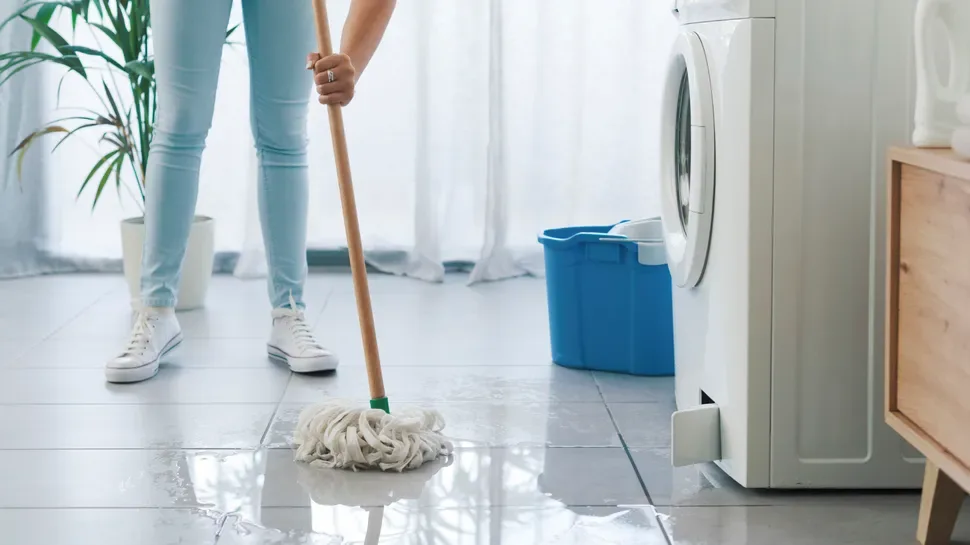
- Minutes 30–45 — Get the visible water up. Towels, a mop and a bucket handle more than people expect. A wet-dry shop vacuum is fine on standing water; a household vacuum is not — water and its motor do not belong together. The goal is not a dry home, just no standing water while help is arranged.
- Minutes 45–60 — Make one call. Call (972) 555-0100 and a person answers. You will be matched with one checked local company, named before it is dispatched, with a written scope before work begins. If your situation is one you can safely finish yourself, we will say so on the call — and tell you how. For what happens next, see emergency water extraction & structural drying.
Three kinds of water, three different rules
Cleanup rules depend on what the water has touched. Professionals grade it in three categories — here is the plain version, because it decides what you may handle yourself and what you should not touch.
| Category | What it is | Garland examples | The rule |
|---|---|---|---|
| 1 — Clean | Water straight from a supply line, not yet contaminated | Burst pipe, water heater failure, supply line to a sink | Safe to start yourself: stop it, mop it, dry it fast |
| 2 — Grey | Water that has carried chemicals or waste without solids | Washing machine overflow, dishwasher leak, toilet bowl water with no solids | Gloves on, keep children and pets off it, and dry within a day — it degrades fast |
| 3 — Black | Water carrying bacteria and contaminants | Sewage backup, creek or street flood water, toilet overflow with solids | Never a do-it-yourself job. Stay out and call — see sewage backup cleanup |
When in doubt, grade it up. Water that started clean does not stay clean — left in carpet and wall cavities, Category 1 becomes Category 2 within about a day. Speed is the whole game.
Four things that make it worse
Waiting until morning
A leak found at midnight feels like a morning problem. It is not. Every hour of standing water widens the area that must be dried, and the 24-to-48-hour mold window starts the moment materials get wet — not when you wake up.
Throwing damaged items away
Soaked carpet, a ruined rug, the failed hose itself — photograph them, then keep them aside if you can. Insurers pay for what they can see. Items thrown out before documentation are items argued about later.
Sealing a wet wall with paint
A stain-blocker over a damp wall traps moisture inside the cavity, where mold grows unseen. Walls are dried to a meter reading first — paint is the last step of a water job, never the first.
Wading in backup water
Sewage water carries bacteria that do not care how careful you feel. No sandals, no bare feet, no “just quickly grabbing one thing.” Keep the door closed and let equipped people handle it.
What Garland homeowners ask us
Why Garland calls us first
- Honest about what we are. A matching service, stated on every page — never dressed up as the crew.
- One company, named in advance. You know who is coming before they arrive, with their credentials checked.
- Written scope before work. The price is agreed on paper before anyone starts a machine.
- Dry means measured. Moisture readings, not opinions, decide when equipment leaves.
- Local knowledge. Garland housing, Garland weather, Garland water — including the city line, 972-205-3210.
Water in your home right now?
Call and a person answers — 24 hours a day, 7 days a week. You will be matched with one checked local company, named before it is dispatched, with a written scope before work begins. No obligation: if the assessment is not right for you, you do not proceed.
Call (972) 555-0100Garland Water Restoration is a matching service, not a restoration company. The company that serves you is named, checked, and quoted in writing before work begins.