
Roof Leak Water Damage in Garland, TX
The drip in your kitchen rarely sits under the hole in your roof. One call connects you with checked Garland pros — a roofer to seal the entry, a vetted crew to dry the attic, insulation and ceilings it soaked.
Get an Assessment
(972) 555-0100Open 24 hours, 7 days a week
- Your call goes directly to the number shown
- The company is named before it is sent
- Written scope before any work begins
Water takes the scenic route through a roof
Rain enters at a lifted shingle or a failed flashing, then runs along the decking and down a rafter before it ever drips — which is why the stain on your ceiling can sit ten feet from the actual hole. Roof leak work is therefore always two jobs: the roofer finds and seals the entry, and the drying crew deals with everything the water touched on its way down. Skip either half and the next storm starts the story over.
Garland Water Restoration is a matching service, not a restoration company, and we say that up front. We connect you with one vetted local company. The company that serves you is named and quoted in writing before work begins.
Six entries rain uses
Garland roofs take Texas weather full in the face — the straight-line winds of 28 May 2024 gusted to 95 mph, and hail season returns every spring. Here is where they open up.
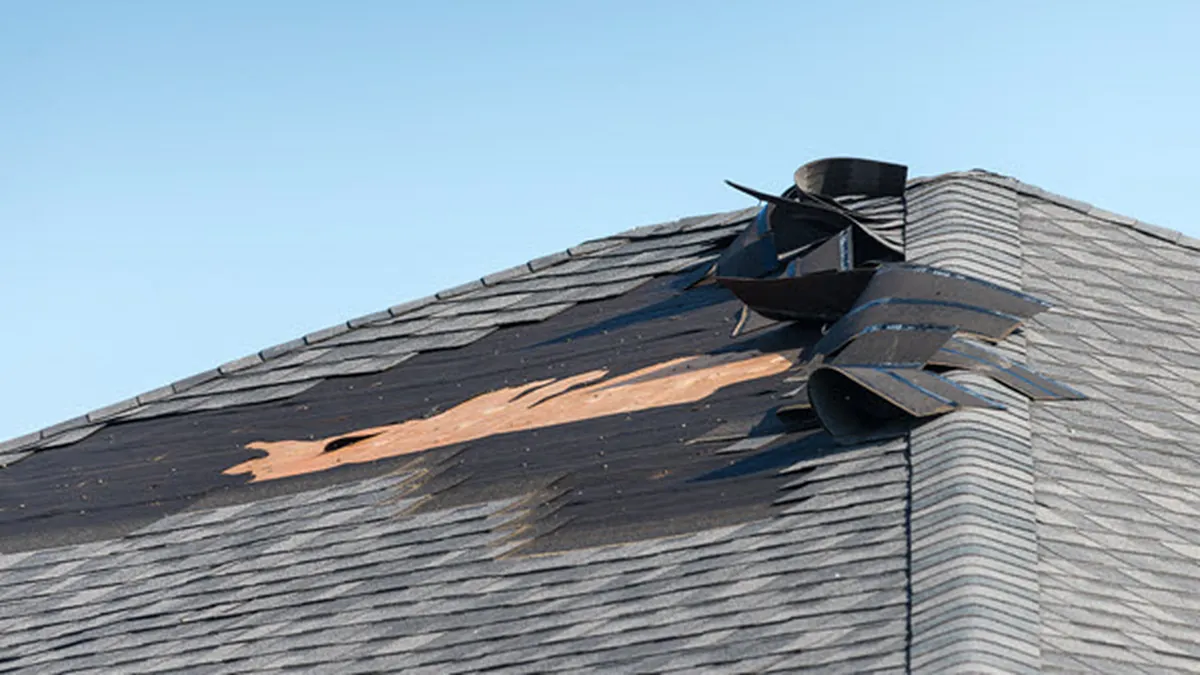
Wind-Lifted Shingles
Storm wind gets under shingle edges, breaks the seal, and folds or removes them entirely. The exposed felt and decking below drink the next rain whole. Shingles in the yard after a storm are a leak already scheduled.
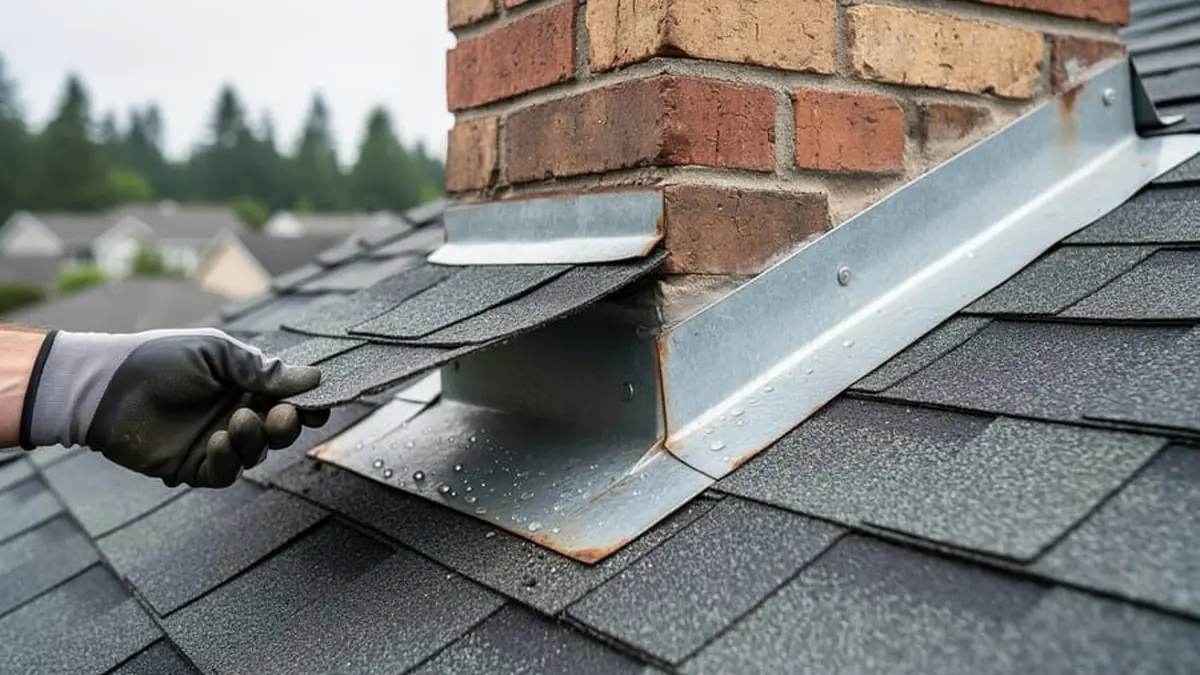
Flashing & Valleys
The metal around chimneys, vents and roof joins is where most slow leaks live. Flashing rusts, lifts, and loses its seal years before the shingles around it fail — a quiet drip with every rain.
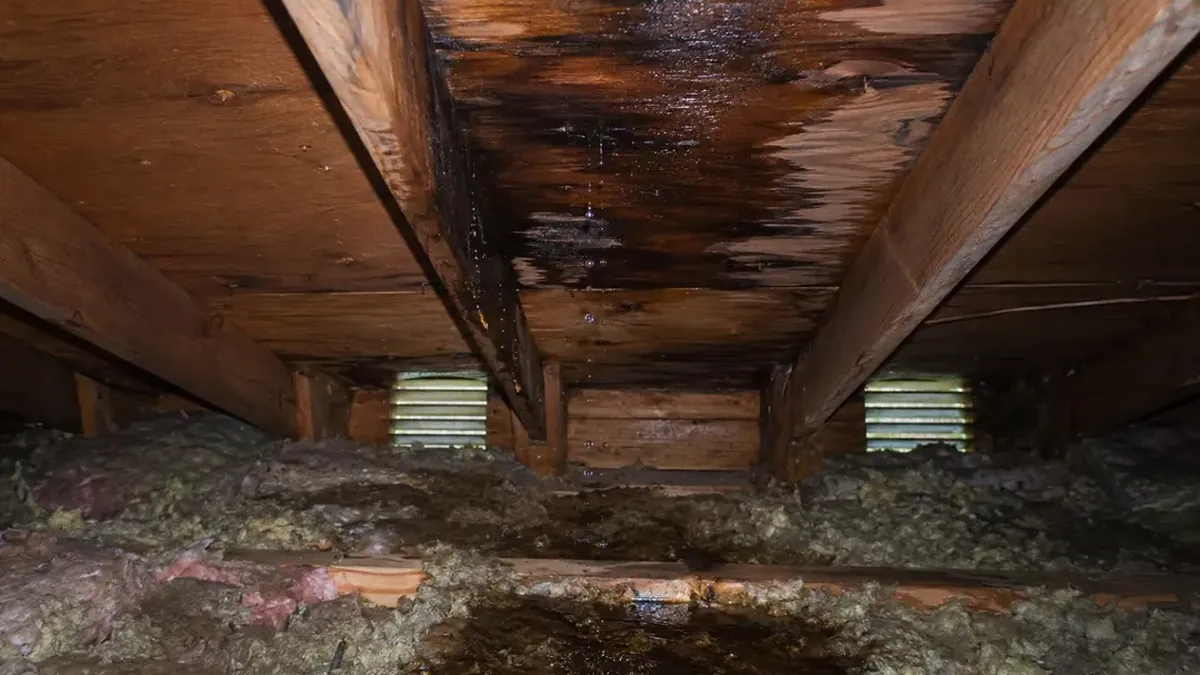
The Attic Tells First
Before any ceiling stain, the attic knows: dark tracks on the decking, damp insulation, a musty smell after rain. A look up there after a storm is the cheapest leak detector you own.
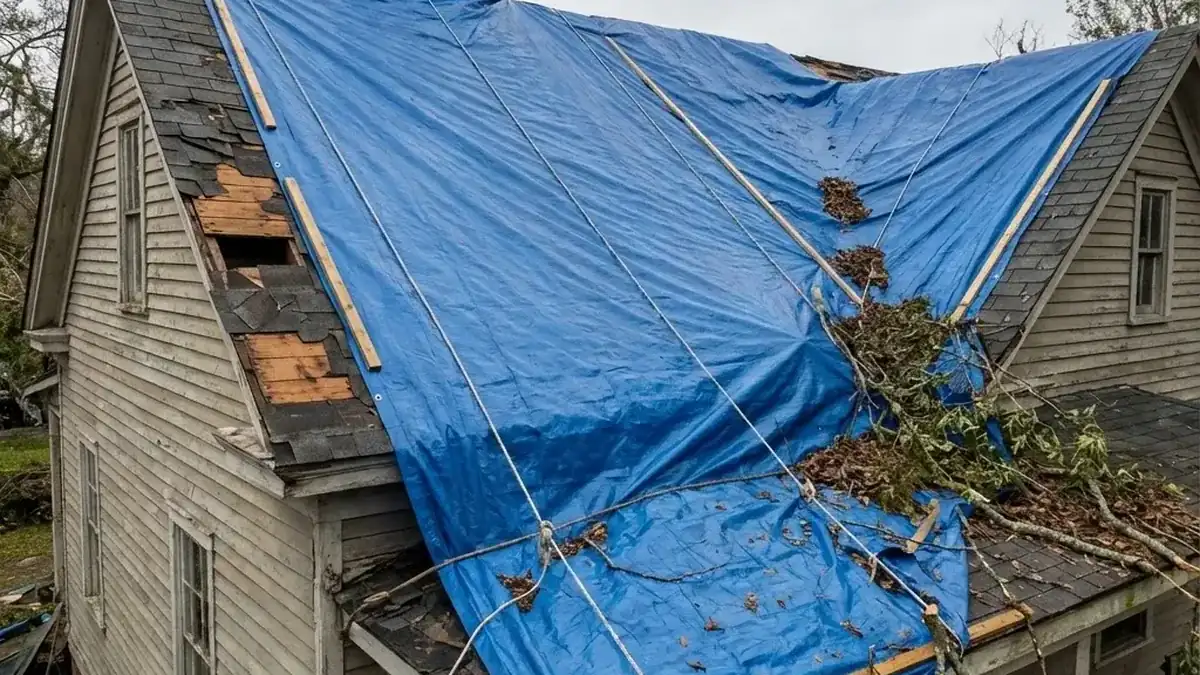
Emergency Tarping
When the roof is open and rain is coming, a properly anchored tarp buys the days the repair needs. It is a stopgap, not a fix — and insurers expect it, because it limits the damage they are paying for.
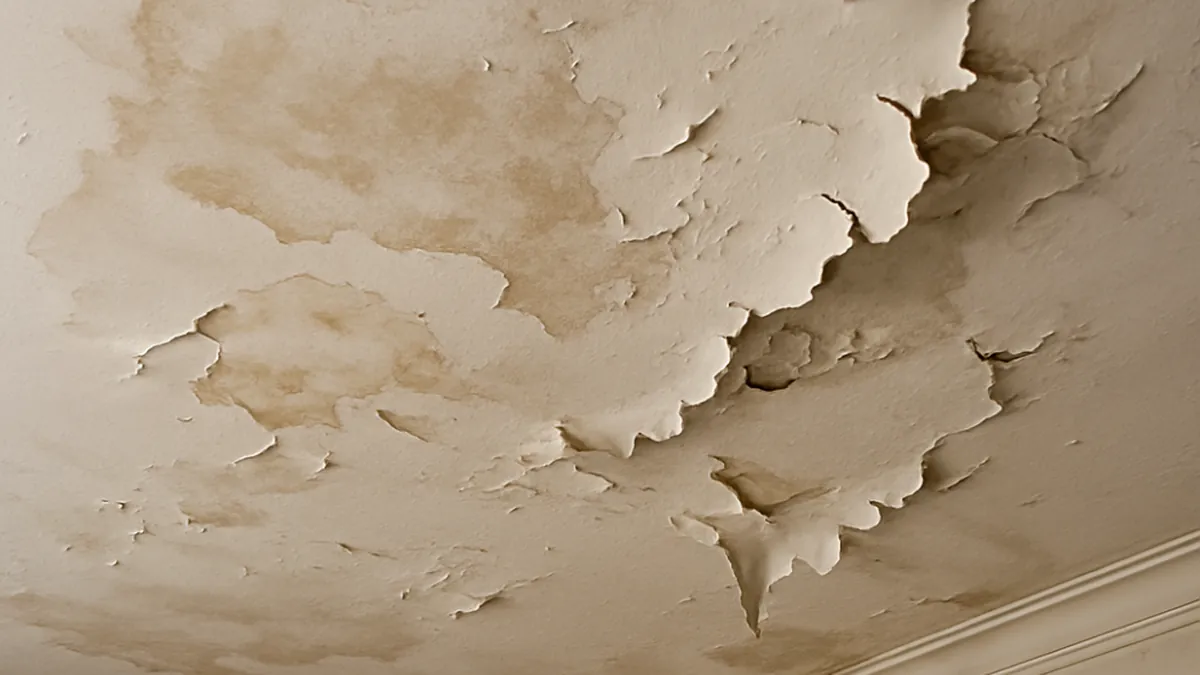
The Bulging Ceiling
A ceiling that sags or bubbles is holding pooled water, and wet drywall is heavy. Crews sometimes drain a bulge deliberately — one small hole, a bucket beneath — because a controlled drip beats a collapse at 3 a.m.

The Permanent Repair
Shingles, flashing and decking made good — the only ending that stops the cycle. Drying the inside before the roof is sealed is wasted work; sealing the roof without drying the inside is a mold farm. Order matters.
Storm damage or old age?
Insurers draw a hard line between the two, and it decides what gets paid for. Here is how the line is drawn.
| Factor | Storm-created opening | Wear, age & neglect |
|---|---|---|
| Example | Wind tore shingles off on 28 May | Flashing rusted through over years |
| Roof repair | Usually part of the claim | Your cost — maintenance, not accident |
| Interior water damage | Usually covered | Often denied as gradual damage |
| Evidence | Storm dates, photos, shingles saved | Hard to date — document anyway |
| Tarping | Expected of you; often reimbursed | Still wise — stops the damage growing |
Either way, the sequence at your house is the same: seal the entry, then dry the inside. The claim conversation never improves by letting water sit.
What we do on every call
- Seal the sky first. Tarp or roofer dispatched before interior work is planned — drying under an open roof is money rained away.
- Trace the water’s real path. From the entry point down — decking, rafters, insulation, ceiling — because the drip is the end of the trail, not the start.
- Deal with wet insulation honestly. Dried in place when it can recover; removed when it cannot — with the reason in the written scope.
- Drain bulges safely. Pooled ceiling water released in a controlled way before its weight makes the decision for everyone.
- Antimicrobial treatment. Attic-facing drywall and timber that stayed wet get treated — roof leaks repeat, and growth loves a head start.
- Document the storm story. Dates, photos of the damage and the opening, saved shingles — the file an adjuster wants to see.
- Dry before the file closes. The file closes when the structure is dry.
Roof leak questions
What roof leak cleanup costs
The roofing work is quoted by the roofer. Your exact price is a written scope after the attic and ceilings are checked — never a guess over the phone.
The company that serves you prices your written scope before work begins, and if the price is not right, you do not proceed.
Built to be checked, not just believed
- Honest about what we are. A matching service, stated on every page — never dressed up as the crew.
- One company, named in advance. You know who is coming before they arrive.
- Written scope before work. The price is agreed on paper before anyone starts a machine.
- The structure is dried before equipment leaves.
- Local knowledge. Garland housing, Garland weather, Garland water — including the city line, 972-205-3210.
Water in your home right now?
Call the number shown — 24 hours a day, 7 days a week. You will be matched with one checked local company, named before it is dispatched, with a written scope before work begins. No obligation: if the written estimate is not right for you, you do not proceed.
Call (972) 555-0100Garland Water Restoration is a matching service, not a restoration company. The company that serves you is named and quoted in writing before work begins.